Ask any Ohio restoration crew what fills the most basements, and the answer is rarely dramatic. It's not the hundred-year flood — it's the sump pump that quit at 2 a.m. during a thunderstorm. Ohio's combination of clay soils, high water tables, and basement-heavy housing makes the sump pump the single most important appliance in your home. And most homeowners ignore theirs until it fails.
Sump pump failure is Ohio's #1 basement flooding cause. Learn why pumps fail (power loss, stuck switches, undersizing), the battery backup fix, and a seasonal maintenance checklist.
01Why Sump Pumps Fail
Power outages. The cruel irony: the storms that deliver the water also knock out the power. A pump with no electricity is a decoration. This is the #1 failure mode in Ohio.
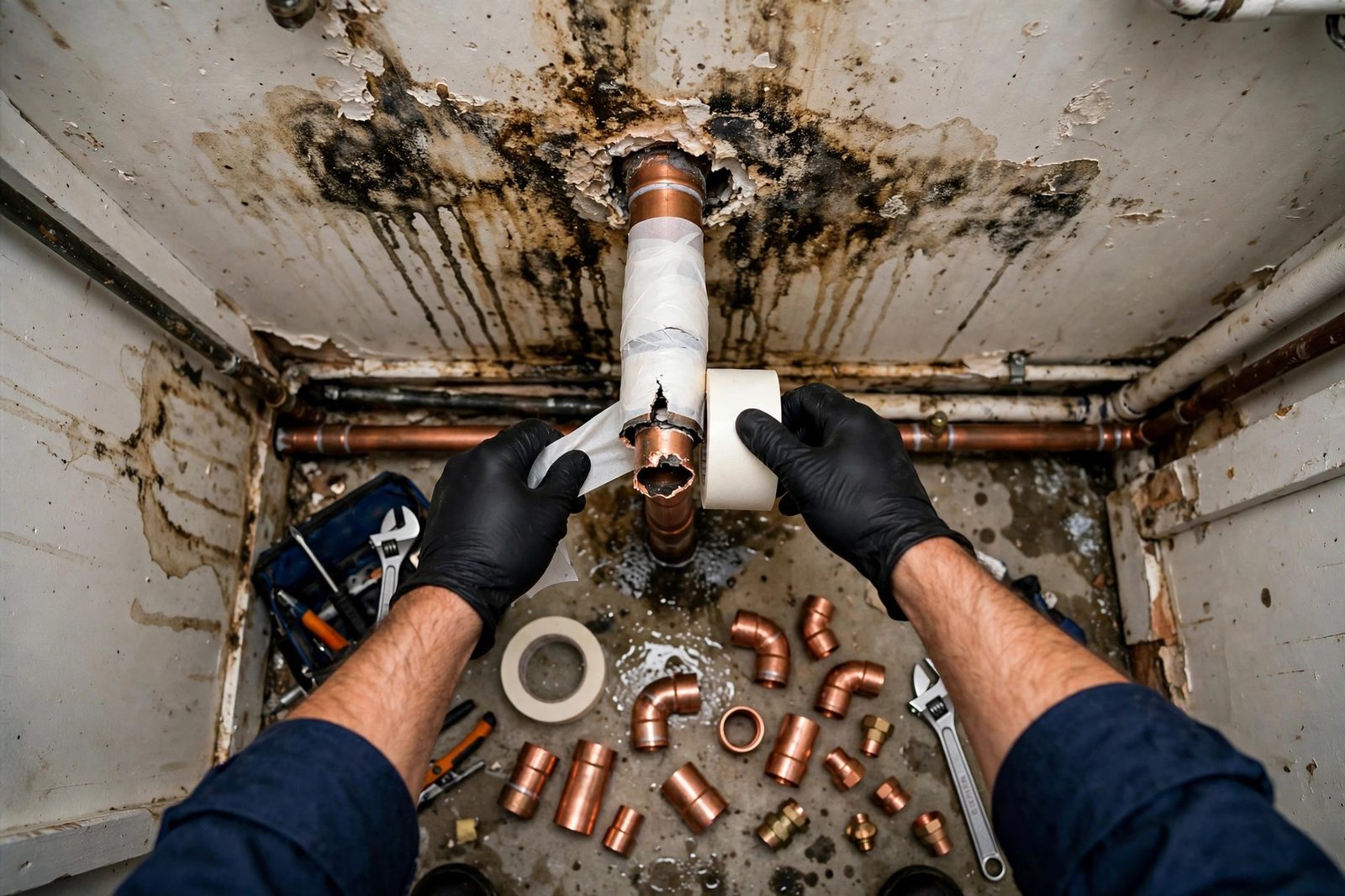
Stuck or failed float switches. The float that triggers the pump gets tangled, jammed against the pit wall, or simply wears out. Pumps often die not from motor failure but from a $20 switch.
Undersized or overwhelmed pumps. A pump rated for normal seepage can't keep up with a spring deluge on saturated clay soil. If your pump runs constantly during rain, it's undersized for your water table.
Clogged discharge lines. The pipe carrying water outside freezes in winter, clogs with debris, or terminates too close to the foundation — recycling the same water back into the pit.
Age. Most sump pumps last 7–10 years. If yours is older and you've never serviced it, you're on borrowed time.
02The Fix That Matters Most: Battery Backup
A battery backup sump pump system — a second pump powered by a deep-cycle marine battery — keeps pumping through outages. For Ohio's storm-driven flooding pattern, this is the highest-value flood-prevention purchase a homeowner can make, typically $300–$800 installed. Some systems even text you when they activate. If you do one thing after reading this article, make it this.
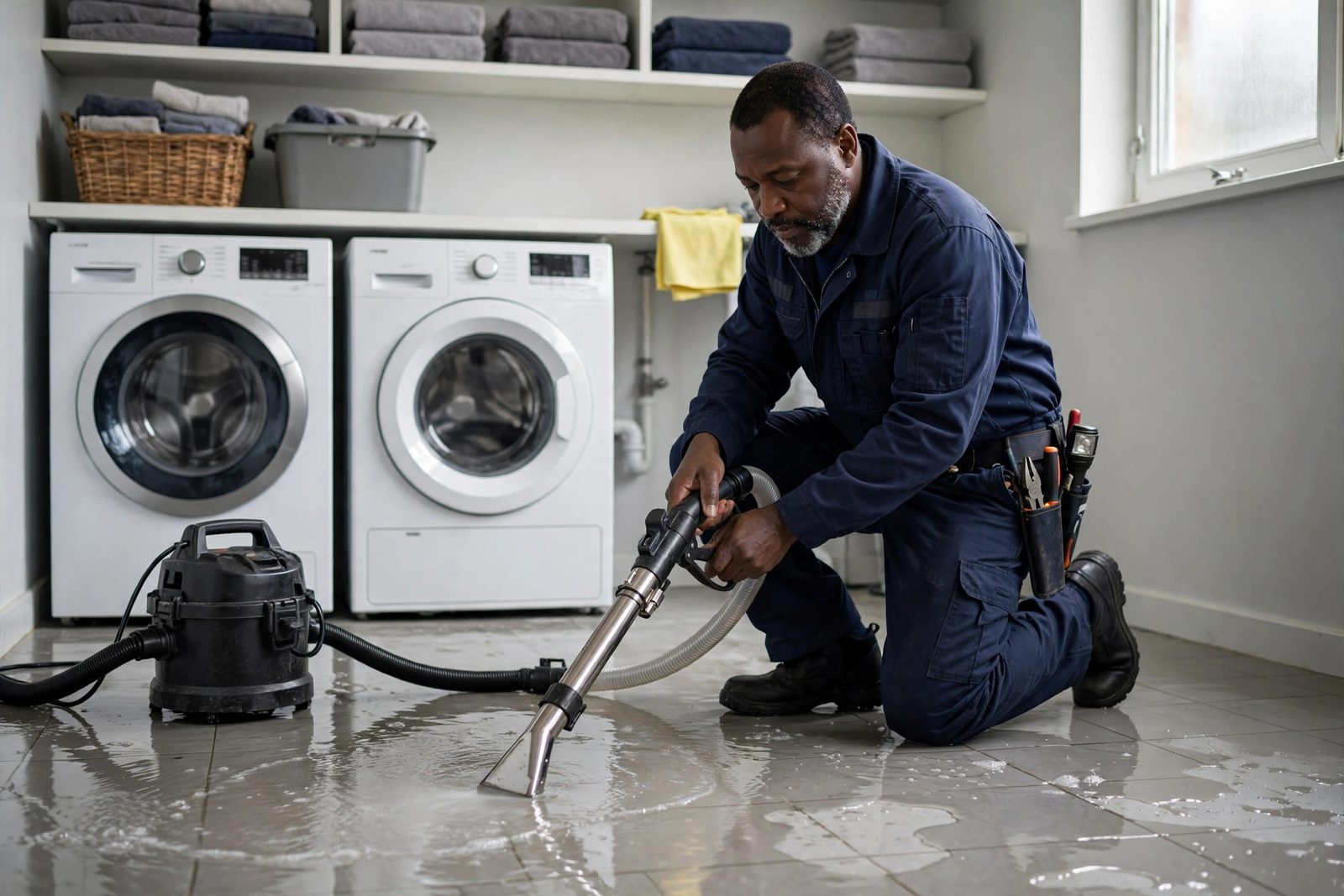
Even better: a combination system with a primary AC pump, battery backup pump, and Wi-Fi alarm that alerts your phone when water rises. Total investment is a fraction of a single basement flood cleanup.
03Seasonal Sump Pump Maintenance Checklist
Spring (before storm season):
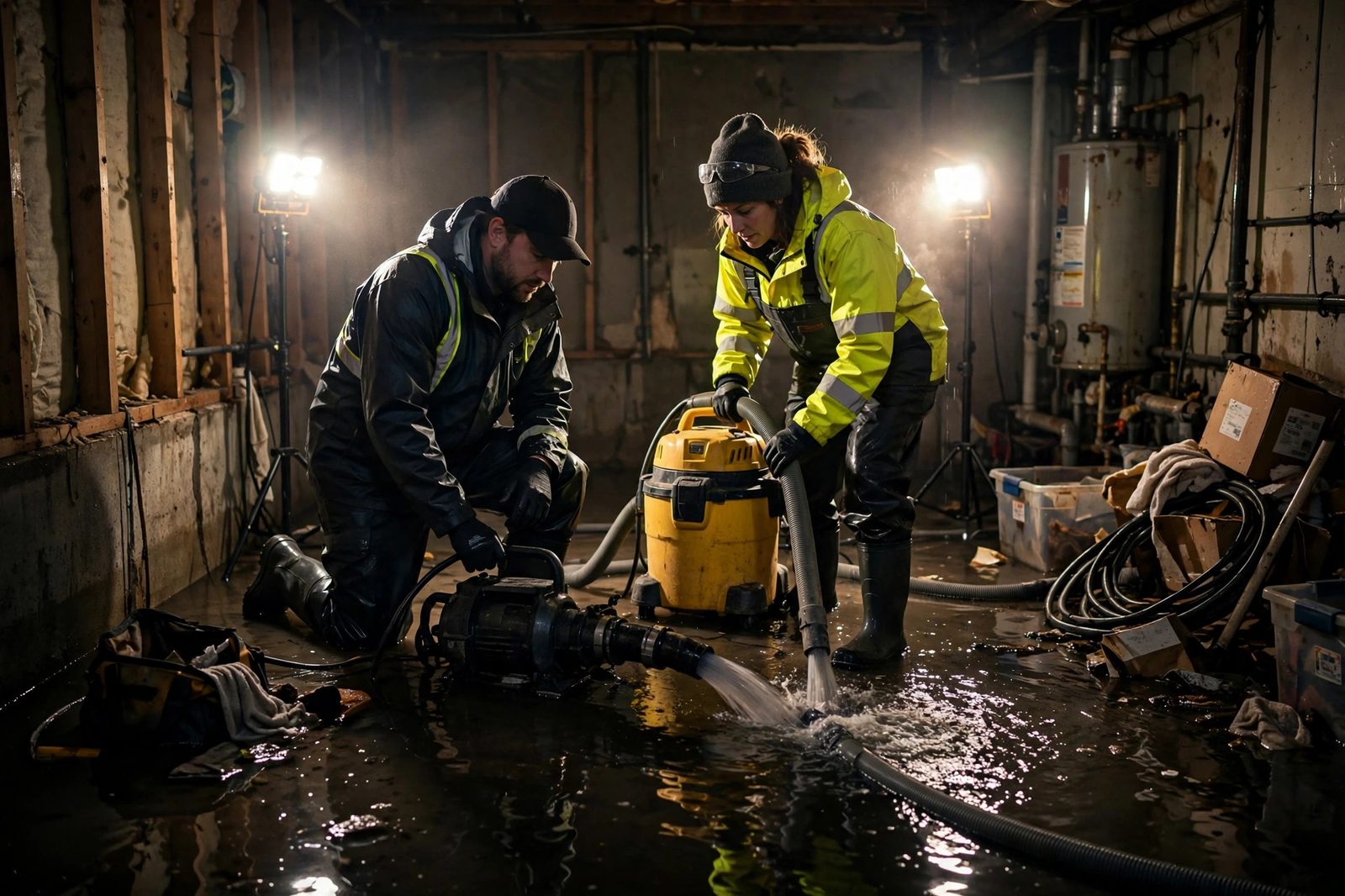
- Pour a bucket of water in the pit — the pump should activate, discharge, and shut off smoothly
- Clear debris from the pit and the float's range of motion
- Check the discharge line outside for blockages, freezing damage, or disconnection
- Test the battery backup by unplugging the primary pump
Fall:
- Repeat the bucket test
- Make sure the discharge line won't freeze (it should slope away and terminate well from the foundation)
- Replace backup batteries every 2–3 years, even if they test fine
Anytime the pump runs constantly: that's a warning sign — call a plumber to assess sizing before the next big storm, not during it.
04When the Pump Has Already Failed
If you're reading this with water on the floor: kill power to the basement if water is near anything electrical, then call (614) 956-3233. We extract the water, dry the structure completely, and — critically — dry inside wall cavities and under flooring where DIY efforts can't reach. Then install that battery backup before the next storm.

More Than Water Removal
Water is only the first problem. Here's what we actually fix when we walk through your door.
Structural Damage
Standing water weakens framing, subfloors, and foundations. Fast extraction stops a small leak from becoming a structural repair.
Mold Growth
Mold can colonize damp drywall within 48 hours. We dry to verified moisture standards and treat surfaces to prevent regrowth.
Health Risks
Sewage backups and long-standing water carry bacteria and contaminants. We clean and sanitize until the space is safe again.
Lingering Odors
A musty smell means moisture is still hiding somewhere. We find the source, dry it completely, and deodorize — never just mask it.
Ruined Floors & Walls
Buckled hardwood, swollen drywall, peeling paint. We remove what can't be saved and rebuild what matters, start to finish.
Insurance Stress
Claims stall on thin documentation. We photograph everything, log moisture readings daily, and deliver adjuster-ready reports.
“Every hour water sits, the damage — and the bill — grows.”
Call (614) 956-3233 — We Answer 24/7Why Ohio Homeowners Call Us First
- 24/7 live dispatch — a real person answers, day or night, holidays included
- 60-minute emergency response goal across our Ohio service area
- Upfront, honest pricing explained before work begins
- Insurance-ready documentation — photos, moisture logs, line-item reports
- Mold prevention built in — antimicrobial treatment on every drying job
- One accountable crew from emergency extraction to final repairs
Water Damage Can't Wait — Neither Do We
Our Ohio crews are on call 24/7 for emergency water extraction and drying.
Call (614) 956-3233 Now?Sump Pump FAQs
Typically 7–10 years with maintenance. Pumps in high-water-table areas that cycle frequently wear faster. If yours is over 7 years old, budget for replacement proactively.
A quality deep-cycle battery runs an efficient backup pump intermittently for many hours — usually enough to ride out a storm and outage. For extended outages, some homeowners add a second battery or a generator connection.
In parts of Ohio with high water tables, frequent cycling can be normal — but it also accelerates wear. Have a plumber verify the pump is sized correctly and the check valve is working; constant cycling often means water is flowing back into the pit.
Only if you carry the water backup/sump overflow endorsement (usually $40–$160/year). Standard policies exclude it. Check your policy today — this is the coverage gap that surprises the most Ohio homeowners.
How Was Your Experience?
If our crew helped you through a water emergency, your review helps Ohio neighbors choose with confidence.