Ironton's floodwall holds the river, but basements flood first. Integrity Water Damage Restoration Ohio offers 24/7 emergency water damage restoration in Ironton. Call (614) 956-3233 now.
Water Emergency Right Now?
Do these five things first — then let us take it from there.
- Stay safe first. Don't walk through standing water if the power may be on — and never touch submerged outlets, panels, or appliances.
- Stop the source if you can. Shut the main water valve for a burst pipe or appliance leak. For storm flooding, focus on safety, not the water.
- Call (614) 956-3233 now. Our dispatchers answer 24/7 and can talk you through the next steps while a crew rolls.
- Move what matters. Lift rugs, electronics, and furniture legs out of the water if it's safe to do so — every inch helps.
- Don't wait on drying. Mold can start within 24–48 hours. Fast professional drying is the difference between a cleanup and a rebuild.
01"It Starts Flooding Basements, When It First Comes Up"
That's how Ironton's flood superintendent describes what happens when the Ohio River rises — and it's the single most important thing any Ironton homeowner can understand about water damage in this city. The water doesn't come over the floodwall. It comes up through the underground storm-sewer network, into basements, before the river ever threatens the top of the wall.
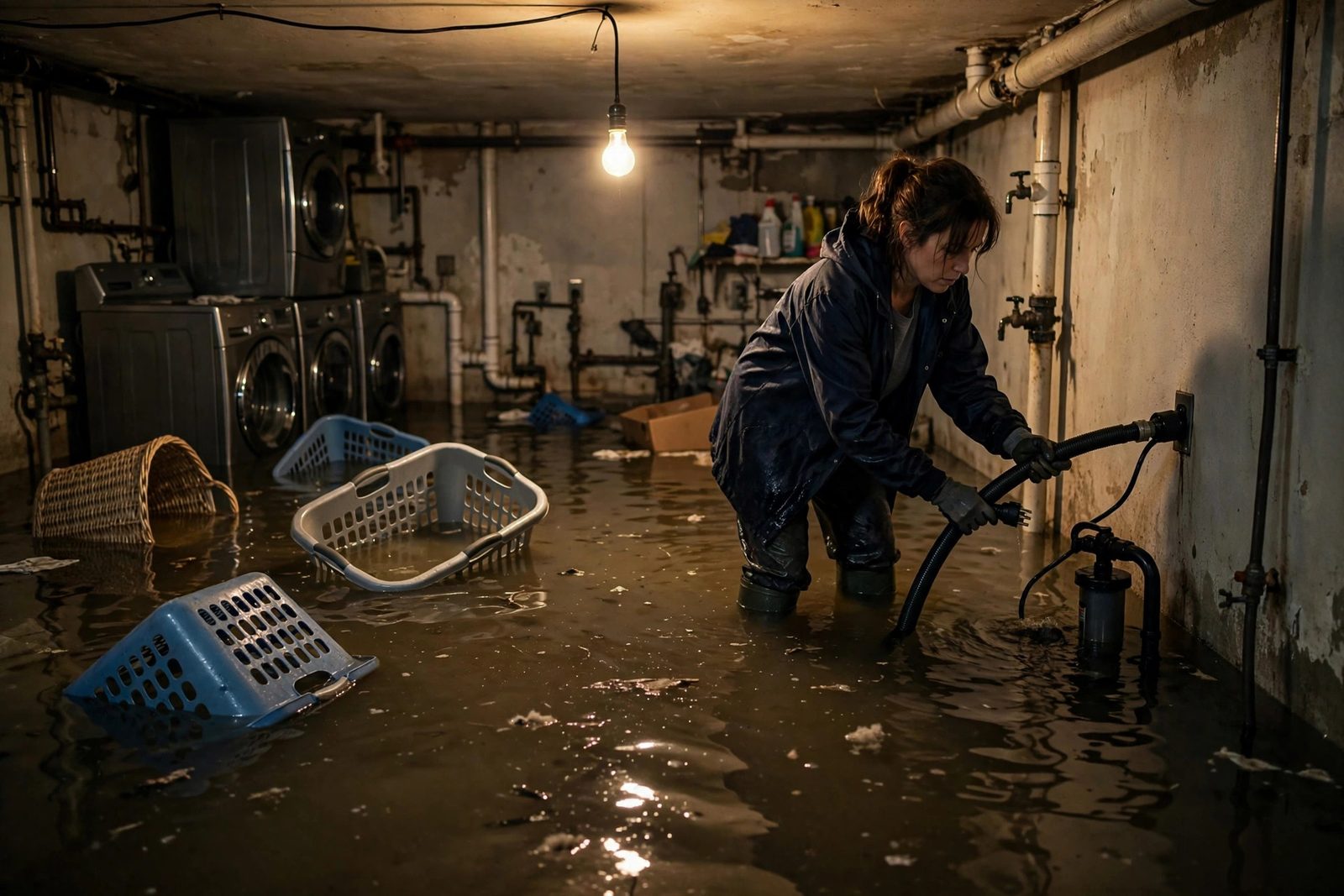
Ironton, the Lawrence County seat of about 10,571, has one of Ohio's best-documented flood-protection systems — and one of its most distinctive water-damage patterns. The wall protects the city from the river. Nothing protects your basement from what the rising river pushes back through the sewers. Integrity Water Damage Restoration Ohio provides 24/7 emergency water damage restoration across Ironton: extraction, sewage cleanup, verified structural drying, and mold prevention. Call (614) 956-3233.
02The 1937 Flood: 12,000 Homeless and 100 Homes Washed Away
Every floodwall, pump station, and emergency plan in Ironton exists because of January 1937. The Ohio River's defining flood forced roughly 10,000 Ironton residents from their homes; 12,000 were left homeless in Ironton plus another 1,500 in Coal Grove. One hundred homes were washed away across Ironton, Coal Grove, and Hanging Rock. County damage reached $3 million — Depression-era dollars. One person died. 230 National Guardsmen were dispatched, and at the height of the crisis there was exactly one working phone in the city — in the courthouse.

Floods had struck before — 1901 and 1913 both hit Ironton — but as local histories put it, nothing was like 1937. The flood was so total that it reorganized the city's entire relationship with the river for the next century.
03How Ironton's Floodwall Works — and Why Your Basement Is the Weak Point
After 1937, the U.S. Army Corps of Engineers built Ironton a roughly $3.8 million flood-protection system in the early 1940s (commissioned 1941, completed 1943, per local reports). The numbers are impressive:
- A 70.5-foot floodwall
- 18 floodgate closures
- 10 pump stations
- More than 5 miles of earthen and concrete levees
The Corps inspects the system annually, and Ironton's flood superintendent runs the pump stations with a small city crew, funded in part through a floodwall fee. Residents are so accustomed to the system that flood-gate installation is a regular occurrence — every 2 to 3 years, by residents' own accounts — including February 2018, when the closures went up and the river crested around 50 feet locally.
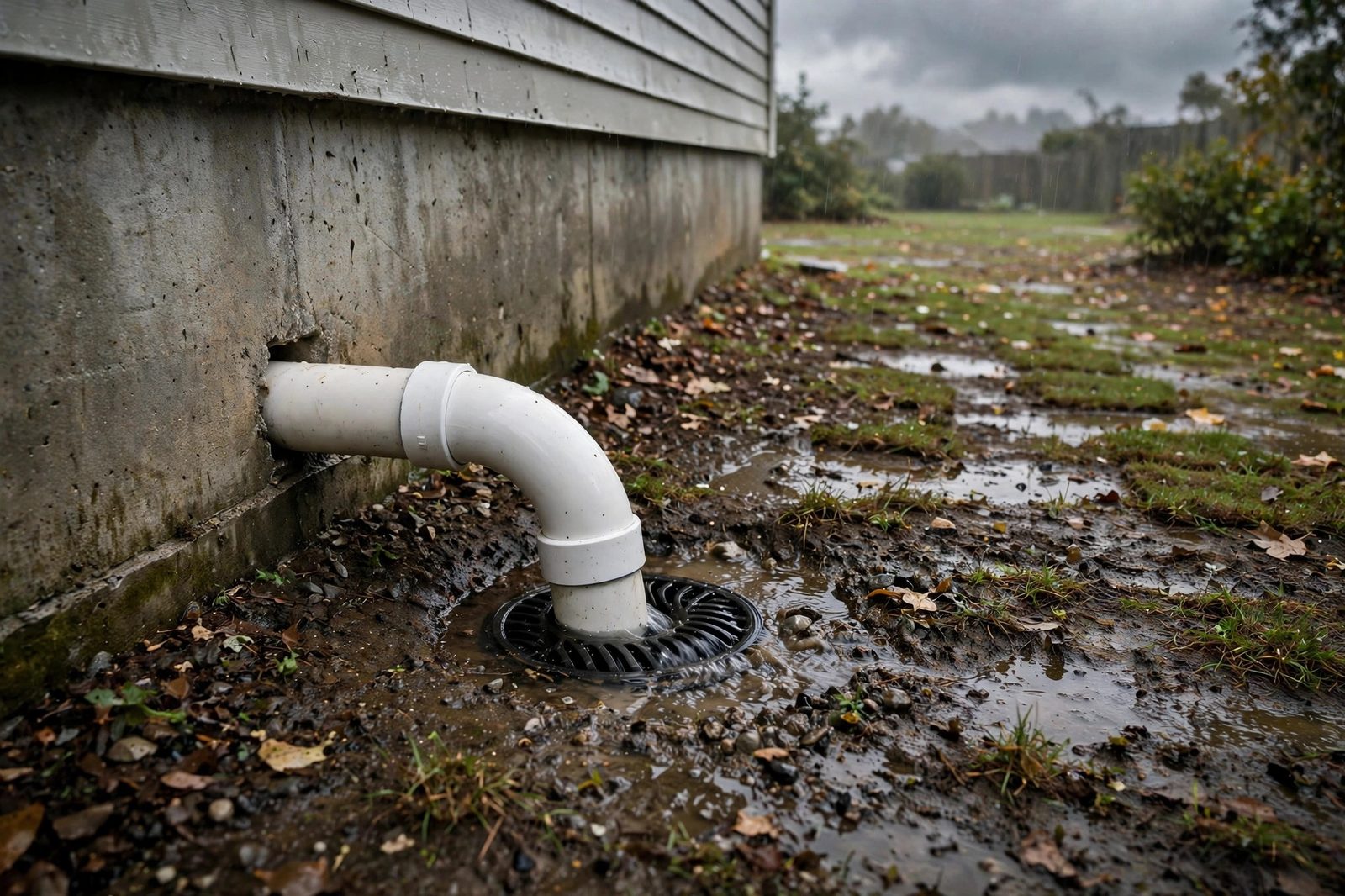
Here's the mechanical truth that matters for your home: the wall and levees keep the river out of the streets. The 10 pump stations exist to collect the water that gets inside — the interior drainage pushed up through the storm-sewer network as the river rises — and pump it back into the river. When the river is high, your basement is effectively below the water table of a pressurized system. That's why the superintendent's warning is so blunt: basements flood first.
04When the Gates Go Up: What River Crests Mean for Homes Behind the Wall
Flood-gate installation every few years is Ironton's flood-season ritual — and each one is a signal to homeowners behind the wall. A cresting river means surcharged sewers, hydrostatic pressure on foundations, and the pump stations working at capacity to move interior water out. It also means this:

- Check your basement early and often during high-water periods — seepage and sewer backup arrive before any official warning reaches your street.
- Know your sewer lateral. Older iron-town housing stock means aging laterals vulnerable to root intrusion and joint failure — exactly the pipes that back up first when the system surcharges. A backwater valve is the best defense.
- Don't wait for the all-clear. Water that entered during a crest keeps damaging walls, floors, and framing long after the gates come down. The 24–48 hour mold window doesn't pause for the river to recede.
If water is in your basement during a river rise, call (614) 956-3233 — we extract and dry while the event is still unfolding, not just after.
More Than Water Removal
Water is only the first problem. Here's what we actually fix when we walk through your door.
Structural Damage
Standing water weakens framing, subfloors, and foundations. Fast extraction stops a small leak from becoming a structural repair.
Mold Growth
Mold can colonize damp drywall within 48 hours. We dry to verified moisture standards and treat surfaces to prevent regrowth.
Health Risks
Sewage backups and long-standing water carry bacteria and contaminants. We clean and sanitize until the space is safe again.
Lingering Odors
A musty smell means moisture is still hiding somewhere. We find the source, dry it completely, and deodorize — never just mask it.
Ruined Floors & Walls
Buckled hardwood, swollen drywall, peeling paint. We remove what can't be saved and rebuild what matters, start to finish.
Insurance Stress
Claims stall on thin documentation. We photograph everything, log moisture readings daily, and deliver adjuster-ready reports.
05Storms Creek: The Flash-Flood Threat Behind the Wall
The Ohio River isn't Ironton's only waterway. Storms Creek runs through the city, and tributary creeks flash-flood on an entirely different schedule than the big river — a summer thunderstorm can send a creek over its banks while the Ohio looks calm behind the wall. Add Lawrence County's inclusion in the March 1997 18-county federal disaster declaration (USGS), and the picture is complete: Ironton faces river flooding, interior-drainage flooding, and tributary flash flooding, each on its own timeline.
06After the River Recedes: Extraction, Sanitizing, and Mold Prevention
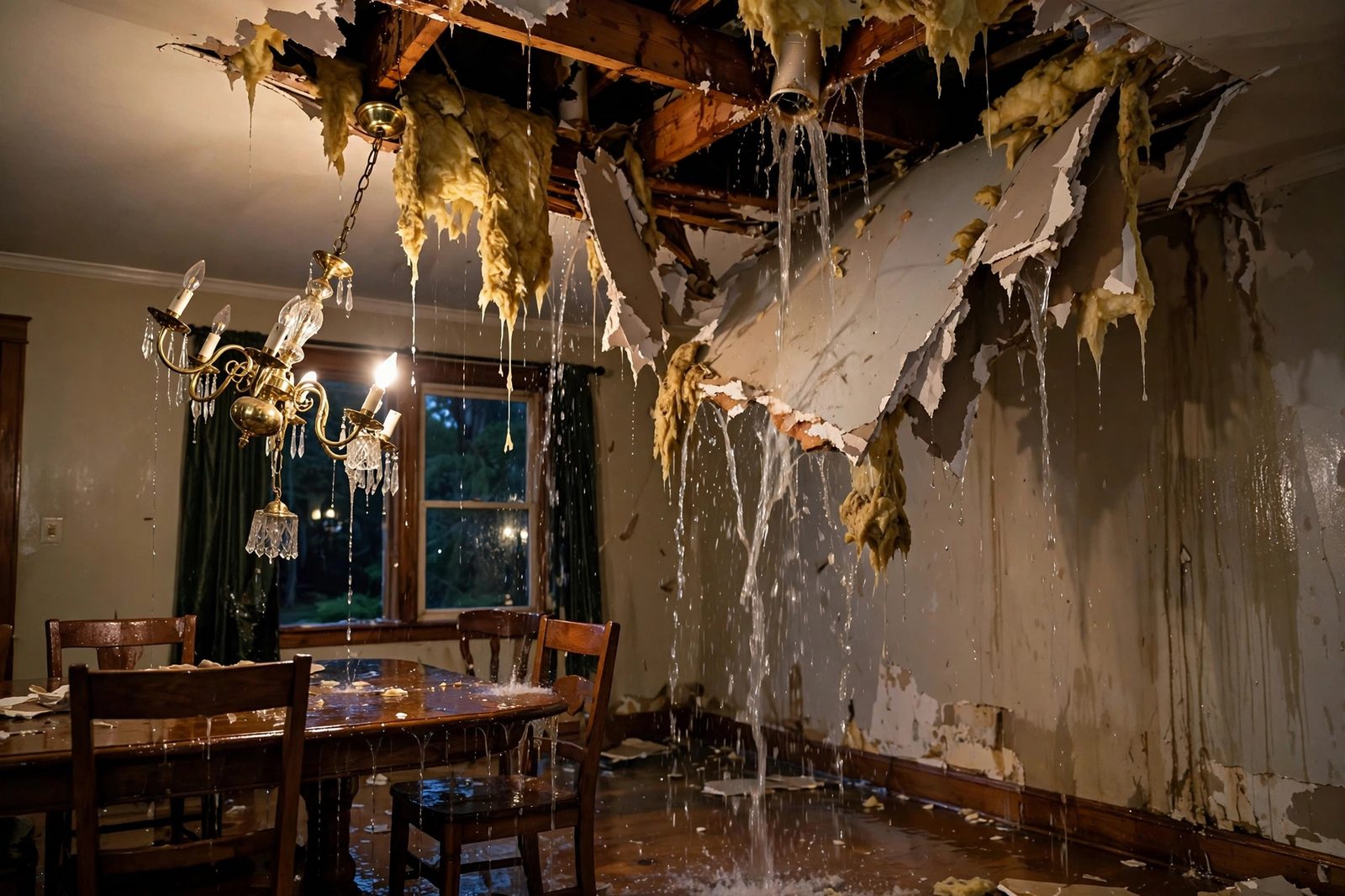
Floodwater that has passed through streets, sewers, and storm drains is contaminated — treat any river-rise basement water as hazardous. Our process: rapid dispatch → moisture mapping with meters and thermal imaging → truck-mounted extraction (including sewage) → industrial drying verified by daily moisture readings → antimicrobial treatment and odor control → mold prevention inside the critical window → documented rebuild of drywall, flooring, and finishes. Every step photographed and logged for your insurance claim. Call (614) 956-3233 24/7.

And when you're downtown, look at the floodwall murals — the Waterloo Wonders, the DT&I railroad, Nannie Kelly Wright — painted on the very structure that shapes this city's water story.
Our Restoration Process
A disciplined, four-step method — no guesswork, no shortcuts, no surprises.
Rapid Assessment
We inspect on arrival, map hidden moisture with meters and thermal imaging, and lay out a clear plan before any work starts.
Water Extraction
Truck-mounted and portable extractors pull standing water fast — the single biggest factor in limiting total damage.
Drying & Dehumidification
Commercial air movers and dehumidifiers run under daily monitoring until every material reaches verified dry standard.
Cleaning & Restoration
Sanitizing, odor removal, drywall, flooring, and paint — your property restored by one accountable crew.
07CTA Blocks
Ironton Basement Flooding? The River Doesn't Wait — Neither Should You. The floodwall holds the river. Your basement is on its own. Integrity Water Damage Restoration Ohio provides 24/7 emergency water extraction, sewage cleanup, and structural drying across Ironton and Lawrence County. Call (614) 956-3233 for immediate response.
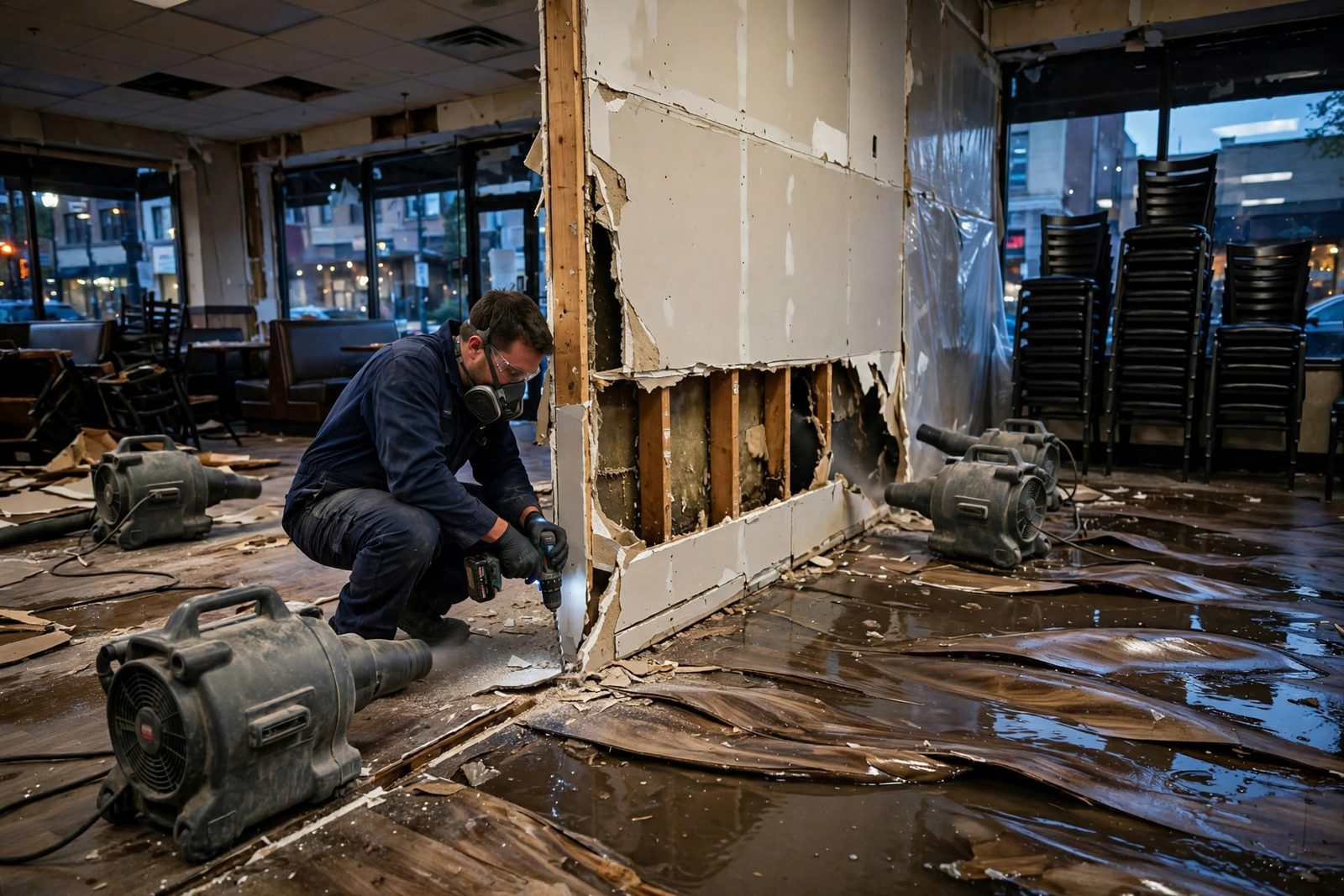
Free Moisture Inspection — Ironton & Lawrence County Musty basement after a river rise? Stains, warping, or odors that won't quit? We'll inspect, measure moisture behind walls and under floors, and give you an honest assessment — free. Call (614) 956-3233.
“Every hour water sits, the damage — and the bill — grows.”
Call (614) 956-3233 — We Answer 24/7Why Ohio Homeowners Call Us First
- 24/7 live dispatch — a real person answers, day or night, holidays included
- 60-minute emergency response goal across our Ohio service area
- Upfront, honest pricing explained before work begins
- Insurance-ready documentation — photos, moisture logs, line-item reports
- Mold prevention built in — antimicrobial treatment on every drying job
- One accountable crew from emergency extraction to final repairs
Water Damage Can't Wait — Neither Do We
Our Ohio crews are on call 24/7 for emergency water extraction and drying.
Call (614) 956-3233 Now?Frequently Asked Questions
That's exactly how Ironton's system works — and fails at the margins. Rising river water pressurizes the underground storm-sewer network, pushing water up into basements before it ever threatens the wall. As the flood superintendent says: "It starts flooding basements, when it first comes up." Call (614) 956-3233 for emergency extraction.
Yes. Water that has moved through sewers and storm drains is contaminated — assume Category 3. Stay out of it, don't run household fans, and call (614) 956-3233 immediately for professional extraction and disinfection.
Standard homeowners policies exclude flooding — you need a separate NFIP flood policy. Sewer backup needs its own endorsement too. Photograph everything before cleanup; our documentation is formatted for adjusters. Call (614) 956-3233.
Residents describe it as a regular occurrence — roughly every 2 to 3 years, including February 2018 when the river crested around 50 feet locally. Each deployment is your cue to check basements, test sump pumps, and make sure backwater valves are working.
No, but don't wait longer. Trapped moisture keeps feeding mold and rot for months or years. Call (614) 956-3233 for a free moisture inspection — we'll measure what's wet behind the walls and give you an honest assessment.
Yes — Ironton, Coal Grove, Hanging Rock, and all of Lawrence County, 24/7. Call (614) 956-3233.
How Was Your Experience?
If our crew helped you through a water emergency, your review helps Ohio neighbors choose with confidence.