Flooding on the Aurora Branch or high water at Geauga Lake? Integrity Water Damage Restoration Ohio offers 24/7 emergency water damage restoration in Aurora, OH. Call (614) 956-3233 today.
Water Emergency Right Now?
Do these five things first — then let us take it from there.
- Stay safe first. Don't walk through standing water if the power may be on — and never touch submerged outlets, panels, or appliances.
- Stop the source if you can. Shut the main water valve for a burst pipe or appliance leak. For storm flooding, focus on safety, not the water.
- Call (614) 956-3233 now. Our dispatchers answer 24/7 and can talk you through the next steps while a crew rolls.
- Move what matters. Lift rugs, electronics, and furniture legs out of the water if it's safe to do so — every inch helps.
- Don't wait on drying. Mold can start within 24–48 hours. Fast professional drying is the difference between a cleanup and a rebuild.
01The Aurora Branch: A River Corridor Through the City
Aurora's defining water feature is the Aurora Branch of the Chagrin River, which flows through the city and shapes its flood geography. The Ohio EPA studied this exact stretch of the river in a 2012 biological and water-quality assessment — the branch is significant enough to carry its own technical study, and its corridor constrains Aurora's low-lying areas in a river-valley setting.

The Chagrin River system has a documented pattern of escalating floods. A University of Akron honors thesis (2021) found a post-July 2003 increase in high-magnitude floods on the Chagrin — the river simply floods harder and more often than it used to. And the May 26, 1989 flood — 23,900 cubic feet per second at the Chagrin River gage in Willoughby, the largest there since 1948 — happened downstream on the same river system that runs through Aurora. What the Chagrin does downstream, it rehearses upstream first.
When the Aurora Branch leaves its banks or a summer thunderstorm overwhelms the streets draining toward it, basements along the corridor take the hit. Integrity Water Damage Restoration Ohio provides 24/7 emergency water extraction, structural drying, and full restoration across Aurora — from the historic village center to the newer subdivisions. Call (614) 956-3233 any time.
02Geauga Lake: High Water on Aurora's Northern Edge
Geauga Lake sits on Aurora's northern edge, and lakeshore homes face a different threat than the river corridor: high water and storm-driven lake damage. The former Geauga Lake amusement park area is a local landmark, but the lake itself is still a working body of water — and during the September 7, 2020 Labor Day flooding event, resident video documented "Aurora, Oh., Geauga Lake Area Flooding" as water rose around lakeside properties. NWS Cleveland's event page covers that regional flood/severe weather day (weather.gov/cle, event_20200907).
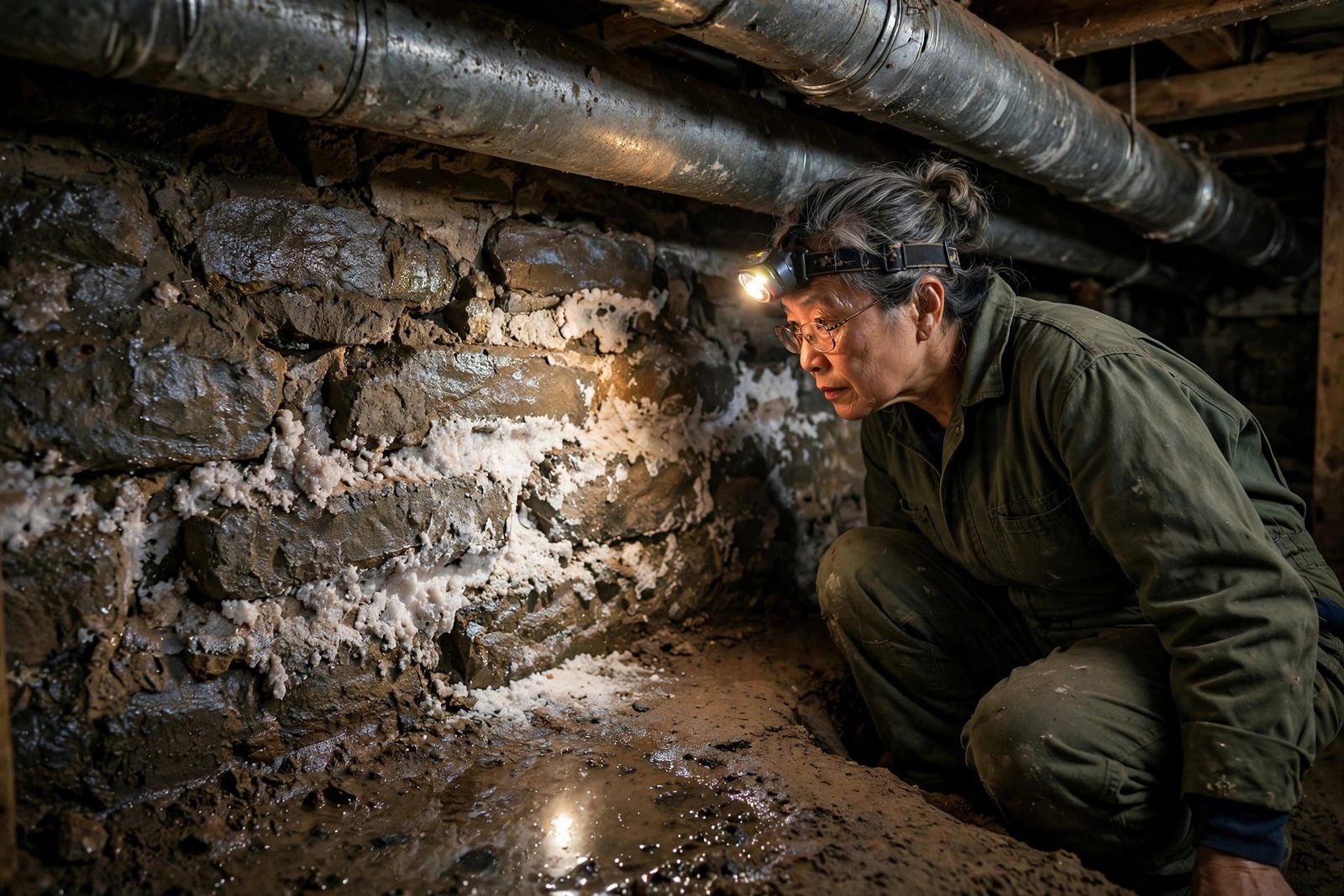
Lake-driven flooding behaves differently from river flooding: it comes with wind-driven waves and seiche-like surges, it lingers, and it can saturate soils around foundations for days. If your Geauga Lake shoreline property took water in September 2020 — or any storm since — residual moisture in framing and subfloors may still be feeding mold. Our free moisture inspections measure what's wet behind the walls. Call (614) 956-3233.
03From 1913 to 2020: Aurora's Flood Dates
Aurora's flood history reaches back to the Great Flood of March 1913, documented by the Aurora Historical Society itself (via the Community Focus video "Aurora History — The 1913 Flood"). The dates that matter for Aurora homeowners:
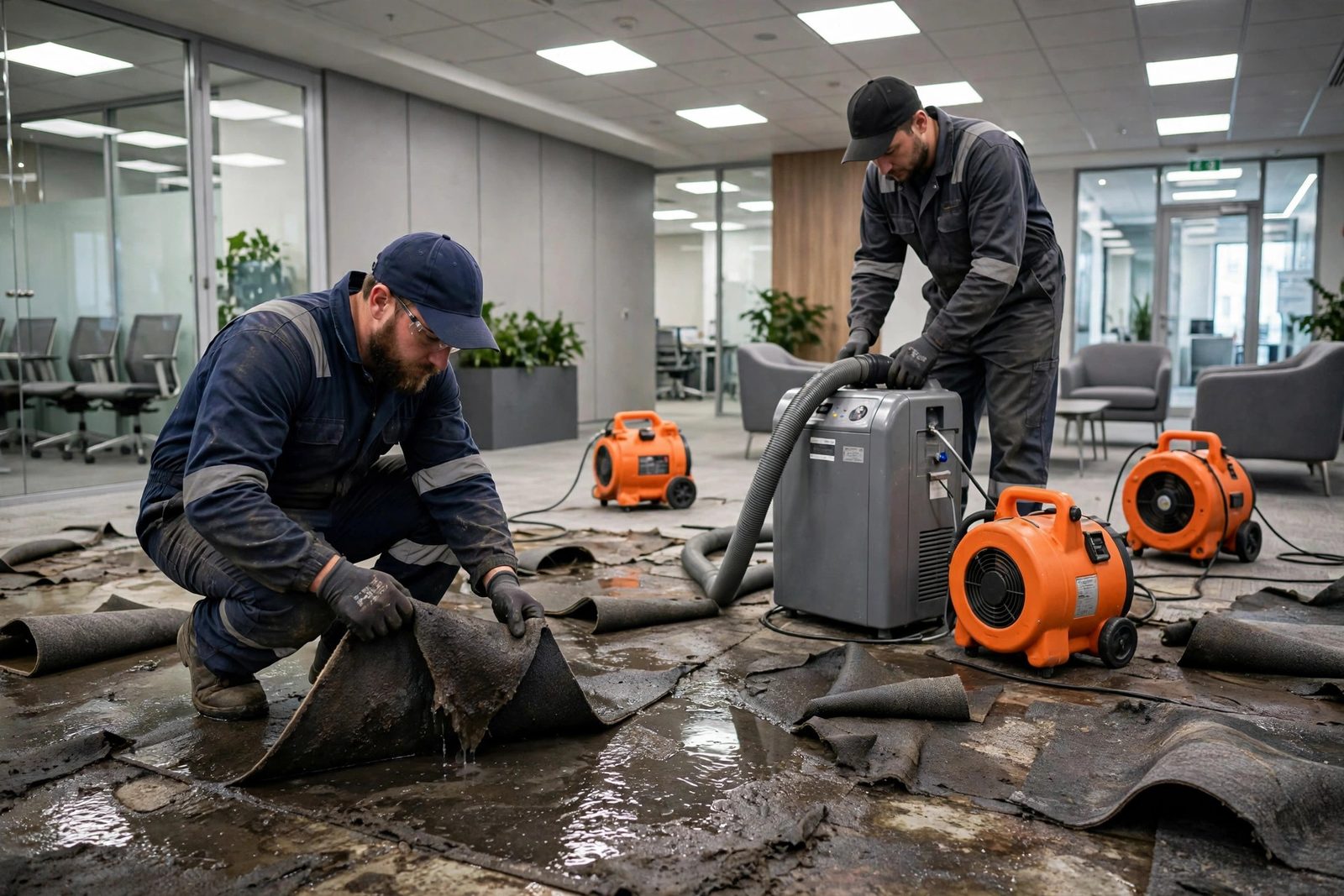
- March 1913 — the defining regional flood, recorded in Aurora's own historical record.
- May 26, 1989 — the largest Chagrin River flood at the Willoughby gage since 1948 (23,900 cfs), on the same river system as the Aurora Branch.
- September 7, 2020 — Labor Day flooding around Geauga Lake and across the region (NWS Cleveland event page).
- Post-July 2003 — a documented increase in high-magnitude Chagrin River floods (Univ. of Akron, 2021).
- February 17, 2022 — snowmelt-plus-rain flooding across the snowbelt region (NWS Cleveland).
That's five separate flood markers in just over a century, on a river that's flooding harder than it used to. If your home has flooded more than once, the pattern isn't bad luck — it's the watershed telling you what to expect. Integrity Water Damage Restoration Ohio handles everything from emergency extraction to full rebuild, with insurance-ready documentation. Call (614) 956-3233.
04Snowbelt Snowmelt: How February 2022-Style Events Flood Aurora Basements
Aurora sits near the Lake/Geauga snowbelt edge in eastern Portage County, where lake-effect snow piles up deep in winter. When a February thaw hits — like the February 17, 2022 event, when snowmelt combined with rain to flood the snowbelt region — all that snow becomes water at once. Frozen ground can't absorb it, storm drains are buried or iced over, and meltwater follows the slope straight to foundations.

Snowmelt flooding is slow, cold, and insidious: it seeps through foundation cracks, floor-wall joints, and window wells over days, not hours. Homeowners often discover it as a damp smell or a wet carpet corner long after the snow is gone — by which point mold may already be established. If spring thaw has ever left your Aurora basement damp, call (614) 956-3233 for a moisture inspection before the next snow season.
More Than Water Removal
Water is only the first problem. Here's what we actually fix when we walk through your door.
Structural Damage
Standing water weakens framing, subfloors, and foundations. Fast extraction stops a small leak from becoming a structural repair.
Mold Growth
Mold can colonize damp drywall within 48 hours. We dry to verified moisture standards and treat surfaces to prevent regrowth.
Health Risks
Sewage backups and long-standing water carry bacteria and contaminants. We clean and sanitize until the space is safe again.
Lingering Odors
A musty smell means moisture is still hiding somewhere. We find the source, dry it completely, and deodorize — never just mask it.
Ruined Floors & Walls
Buckled hardwood, swollen drywall, peeling paint. We remove what can't be saved and rebuild what matters, start to finish.
Insurance Stress
Claims stall on thin documentation. We photograph everything, log moisture readings daily, and deliver adjuster-ready reports.
05Subdivision Growth, Impervious Runoff, and Older Village Homes
Aurora's housing runs from the historic village center to 1980s–2000s subdivisions — and that late-20th-century development boom added significant impervious surface in a river-valley setting. More rooftops, driveways, and streets mean more runoff arriving faster at the Aurora Branch and the storm drains feeding it. When the system fills, the water backs up into the lowest points: basement floor drains, window wells, and the yards grading toward foundations.

If your home uses a septic system, flooding adds a wastewater risk on top of everything else. Across the city, the recurring patterns are familiar to us: sump pump failures during power outages, sewer backup when stormwater overwhelms combined systems, and seepage through older village-center foundations. We answer (614) 956-3233 24/7 for all of them — extraction, disinfection, drying verified by moisture readings, mold prevention inside the critical 24–48 hour window, and documented rebuild.
06CTA Blocks
Aurora Basement Flooding? Don't Wait — Call Now. The Aurora Branch is flooding harder than it used to, Geauga Lake shoreline homes take storm-driven surges, and snowmelt season is always coming. Integrity Water Damage Restoration Ohio provides 24/7 emergency water extraction, structural drying, and full restoration across Aurora and Portage County. Call (614) 956-3233 for immediate response.
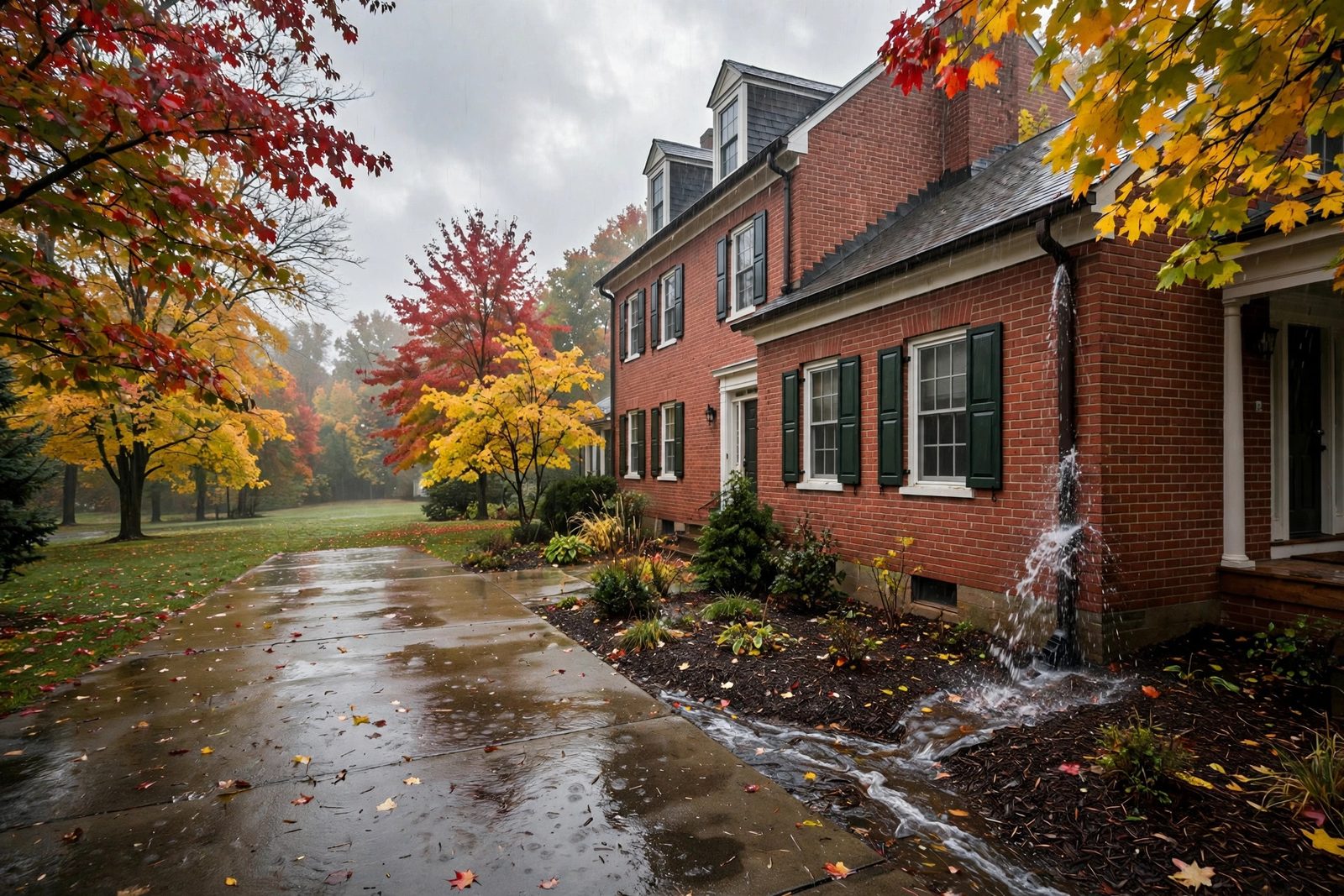
Free Moisture Inspection — Aurora & Portage County Musty smell after the last storm? Stains spreading on the basement wall? Suspect leftover damage from 2020's floods or the 2022 thaw? We'll inspect, measure moisture behind walls and under floors, and give you an honest assessment — free. Serving Aurora, Geauga Lake, Streetsboro, Reminderville, and Bainbridge. Call (614) 956-3233.
Our Restoration Process
A disciplined, four-step method — no guesswork, no shortcuts, no surprises.
Rapid Assessment
We inspect on arrival, map hidden moisture with meters and thermal imaging, and lay out a clear plan before any work starts.
Water Extraction
Truck-mounted and portable extractors pull standing water fast — the single biggest factor in limiting total damage.
Drying & Dehumidification
Commercial air movers and dehumidifiers run under daily monitoring until every material reaches verified dry standard.
Cleaning & Restoration
Sanitizing, odor removal, drywall, flooring, and paint — your property restored by one accountable crew.
“Every hour water sits, the damage — and the bill — grows.”
Call (614) 956-3233 — We Answer 24/7Why Ohio Homeowners Call Us First
- 24/7 live dispatch — a real person answers, day or night, holidays included
- 60-minute emergency response goal across our Ohio service area
- Upfront, honest pricing explained before work begins
- Insurance-ready documentation — photos, moisture logs, line-item reports
- Mold prevention built in — antimicrobial treatment on every drying job
- One accountable crew from emergency extraction to final repairs
Water Damage Can't Wait — Neither Do We
Our Ohio crews are on call 24/7 for emergency water extraction and drying.
Call (614) 956-3233 Now?Frequently Asked Questions — Water Damage in Aurora
It's not too late, but hidden moisture doesn't improve on its own. Water trapped in wall cavities and subfloors keeps feeding mold and rot for months. Call (614) 956-3233 for a free moisture inspection — we measure what's wet behind the walls and give you an honest assessment.
Yes. The Aurora Branch runs through Aurora on the same river system, and the documented post-2003 increase in high-magnitude Chagrin floods applies to the whole watershed. Upstream reaches flood first; downstream records like the 1989 Willoughby peak show what the system can deliver.
Snowmelt flooding often has nothing to do with river levels — it's frozen ground, buried storm drains, and meltwater pooling against foundations. It's one of the most common Aurora flood patterns given the city's snowbelt exposure.
Standard homeowners policies typically exclude both flooding (rising water) and sewer backup. Rising river or lake water needs a separate flood policy; sewer backup needs a water backup endorsement. After any event, photograph everything before cleanup — our documentation is built for adjusters.
Mold can begin within 24–48 hours of water exposure, and cold snowmelt water is no exception — damp, unheated basements are ideal for it. Emergency extraction and professional drying on day one matters more than anything else.
Yes — Aurora, the Geauga Lake area, Bainbridge, Reminderville, Streetsboro, and surrounding Portage and Geauga County communities. Call (614) 956-3233 24/7.
Also Serving Nearby Communities
Fast response across the region — pick your town for local flood risks and what to do first.
How Was Your Experience?
If our crew helped you through a water emergency, your review helps Ohio neighbors choose with confidence.