Lyndhurst sits in the Euclid Creek watershed on the Portage Escarpment. Integrity Water Damage Restoration Ohio offers 24/7 water damage restoration & verified drying. Call (614) 956-3233.
Water Emergency Right Now?
Do these five things first — then let us take it from there.
- Stay safe first. Don't walk through standing water if the power may be on — and never touch submerged outlets, panels, or appliances.
- Stop the source if you can. Shut the main water valve for a burst pipe or appliance leak. For storm flooding, focus on safety, not the water.
- Call (614) 956-3233 now. Our dispatchers answer 24/7 and can talk you through the next steps while a crew rolls.
- Move what matters. Lift rugs, electronics, and furniture legs out of the water if it's safe to do so — every inch helps.
- Don't wait on drying. Mold can start within 24–48 hours. Fast professional drying is the difference between a cleanup and a rebuild.
01Water Runs Downhill — in Lyndhurst, That Matters
Lyndhurst sits atop the Portage Escarpment, the long glacial ridge that steps down toward Lake Erie — and water obeys gravity without exception. Stormwater that falls on Lyndhurst's hillside streets channels downhill fast, collecting speed and volume as it goes. The local pattern is slope drainage and foundation seepage: runoff races down the escarpment, overwhelms drains and swales, and presses into the basements of the homes sitting in its path.
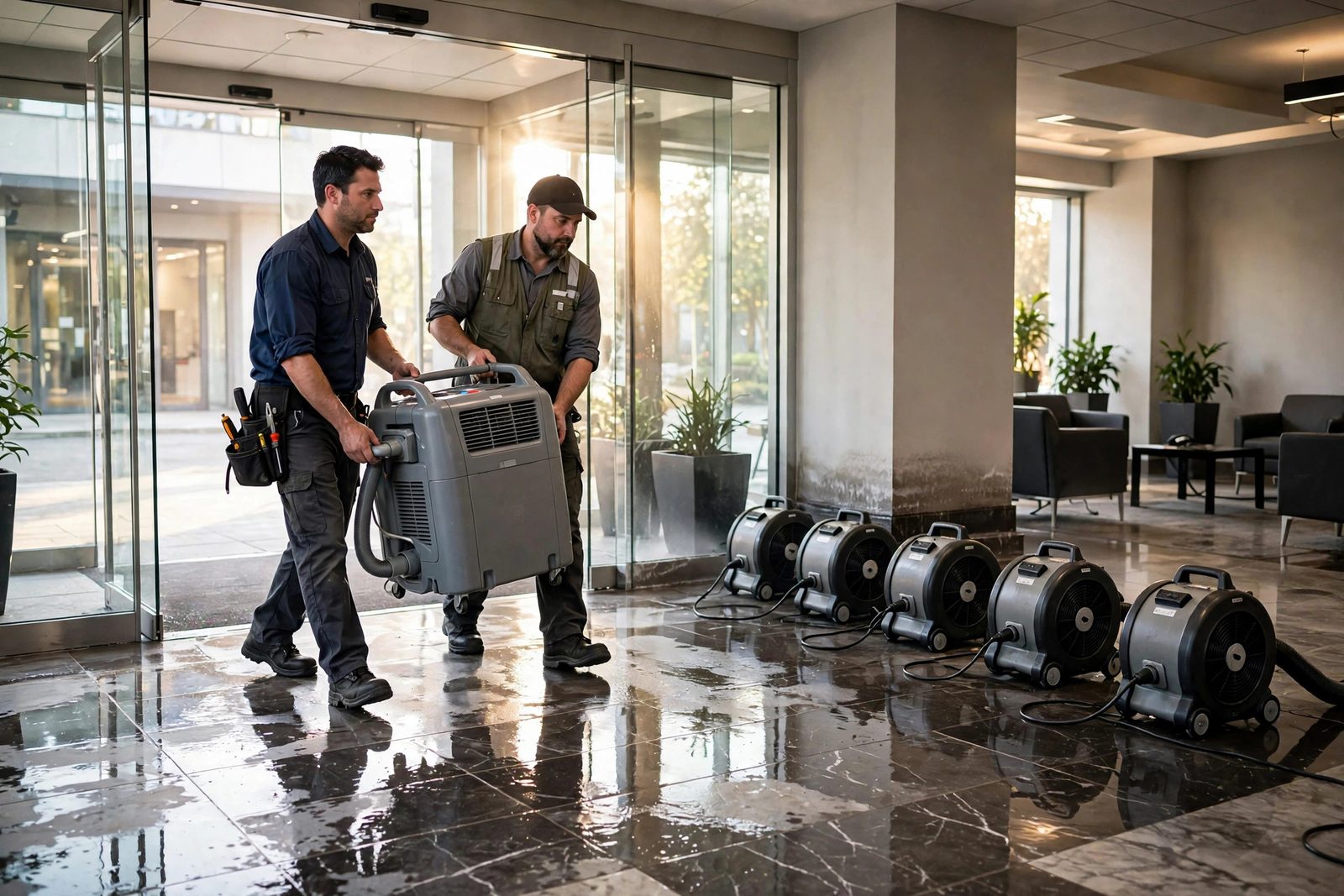
This isn't a theory. It's the documented history of an entire watershed. Lyndhurst drains to Euclid Creek, and the creek's story — the flood-control flume poured in 1988, the tunnel completed in 2018 — is the story of a watershed that has flooded, surcharged, and overwhelmed its infrastructure for decades. If your Lyndhurst basement takes water when storms hit, Integrity Water Damage Restoration Ohio provides 24/7 emergency water damage restoration: extraction, structural drying, mold prevention, and rebuild. Call (614) 956-3233.
02Euclid Creek: the Creek That Drains the Heights
The Northeast Ohio Regional Sewer District maps it precisely: Euclid Creek "drains the communities of South Euclid, Lyndhurst, Willoughby Hills, Richmond Heights, Highland Heights, Euclid and Cleveland before emptying into Lake Erie" (NEORSD 2015 Euclid Creek report). Lyndhurst sits in the upper part of that watershed — which means its stormwater becomes everyone downstream's problem, and everyone's upstream development becomes Lyndhurst's runoff.

Euclid Creek has a main branch and an east branch running near Lyndhurst, and in an urbanized watershed, creeks respond violently to heavy rain. Impervious surfaces — roofs, driveways, streets — convert rainfall into instant runoff, and a creek that was a trickle at noon can be a torrent by dinner. Homes near the creek corridors, and homes in the low spots where slope drainage collects, are the ones that flood first. The watershed's flood history is written in concrete and steel: see below.
03The 1988 Army Corps Flume: Flood Control Carved in Concrete
In 1988, the U.S. Army Corps of Engineers installed a concrete flume on Euclid Creek "to help control flooding in the area" (NEORSD 2014 report). Think about what that means: nearly four decades ago, the flooding in this watershed was severe and chronic enough that the federal government poured concrete to contain it.
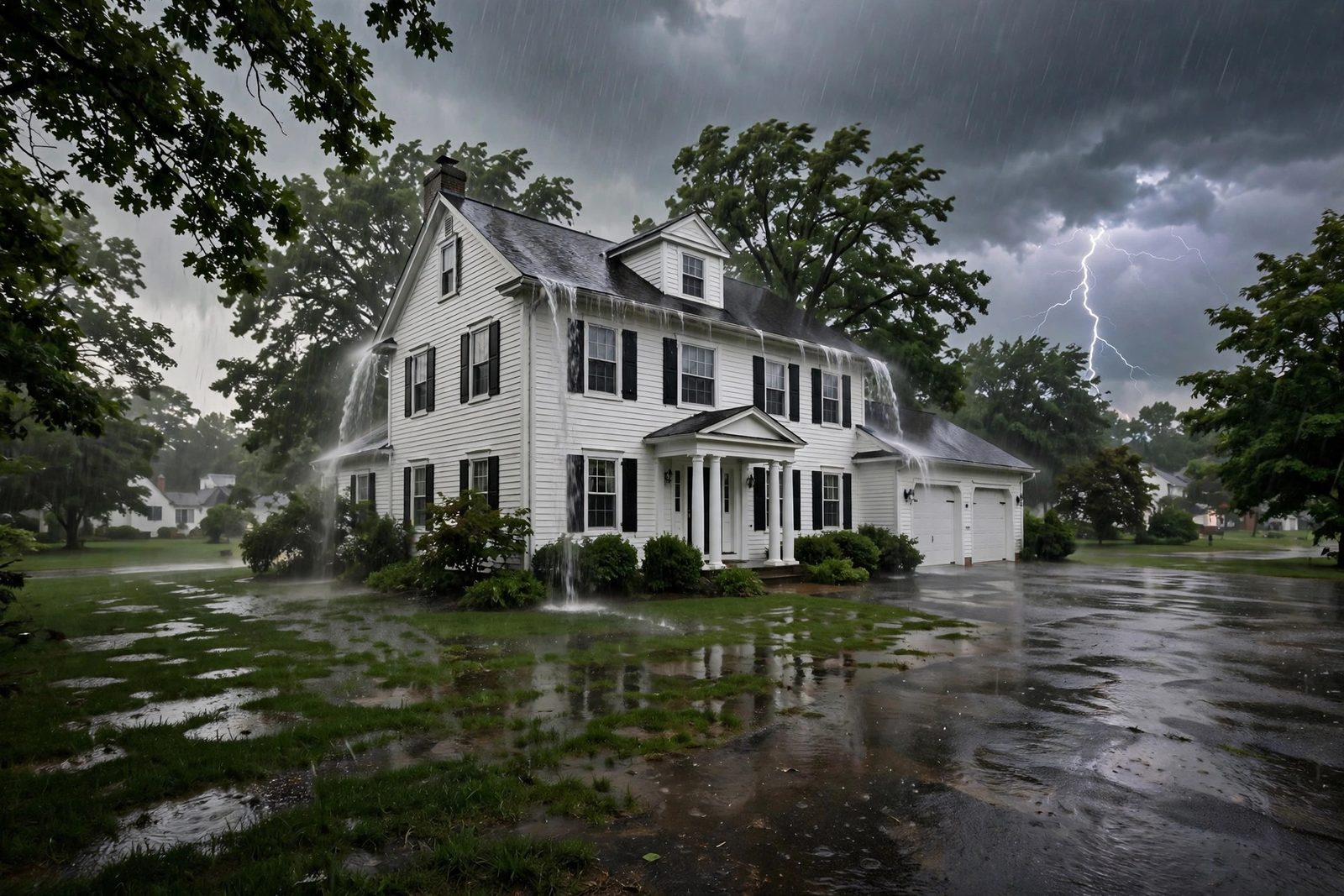
The flume is downstream evidence of the watershed's flood history — and a reminder that Euclid Creek's flooding predates the current housing stock. The 1950s–60s split-levels and ranches that define Lyndhurst's neighborhoods were built into a watershed already known to flood. When intense summer downpours hit the Heights, storm sewers surcharge, the creek rises, and the same slopes that make the neighborhood attractive become the delivery system for basement water.
04The Euclid Creek Tunnel: What the 2018 Project Changed
The largest response to the watershed's wet-weather problem arrived in August 2018, when NEORSD brought the Euclid Creek Tunnel and the Euclid Creek Pump Station online — Project Clean Lake infrastructure built to cut combined-sewer-overflow discharges to the creek. Translation: wet-weather sewer overflows in this watershed were a documented, chronic problem significant enough to justify one of the region's biggest infrastructure investments.

What did it change for Lyndhurst homeowners? It reduced the volume of sewage-laden overflow reaching Euclid Creek during heavy rain — a major environmental win. What it didn't change: your basement. The tunnel manages overflows at the system level; it doesn't stop stormwater from overwhelming your street's drains, seeping through your foundation, or surcharging your lateral. If sewage backs up through your floor drain during a downpour, stay out of it — that's Category 3 black water — and call (614) 956-3233 immediately for professional extraction and disinfection.
More Than Water Removal
Water is only the first problem. Here's what we actually fix when we walk through your door.
Structural Damage
Standing water weakens framing, subfloors, and foundations. Fast extraction stops a small leak from becoming a structural repair.
Mold Growth
Mold can colonize damp drywall within 48 hours. We dry to verified moisture standards and treat surfaces to prevent regrowth.
Health Risks
Sewage backups and long-standing water carry bacteria and contaminants. We clean and sanitize until the space is safe again.
Lingering Odors
A musty smell means moisture is still hiding somewhere. We find the source, dry it completely, and deodorize — never just mask it.
Ruined Floors & Walls
Buckled hardwood, swollen drywall, peeling paint. We remove what can't be saved and rebuild what matters, start to finish.
Insurance Stress
Claims stall on thin documentation. We photograph everything, log moisture readings daily, and deliver adjuster-ready reports.
05Split-Levels, Sump Pumps, and the Storm That Finds Them
Lyndhurst's 1950s–60s split-levels and ranches share a vulnerability profile: below-grade lower levels, sump-pump dependence, and 60-year-old sewer laterals with root intrusion. The recurring pattern:
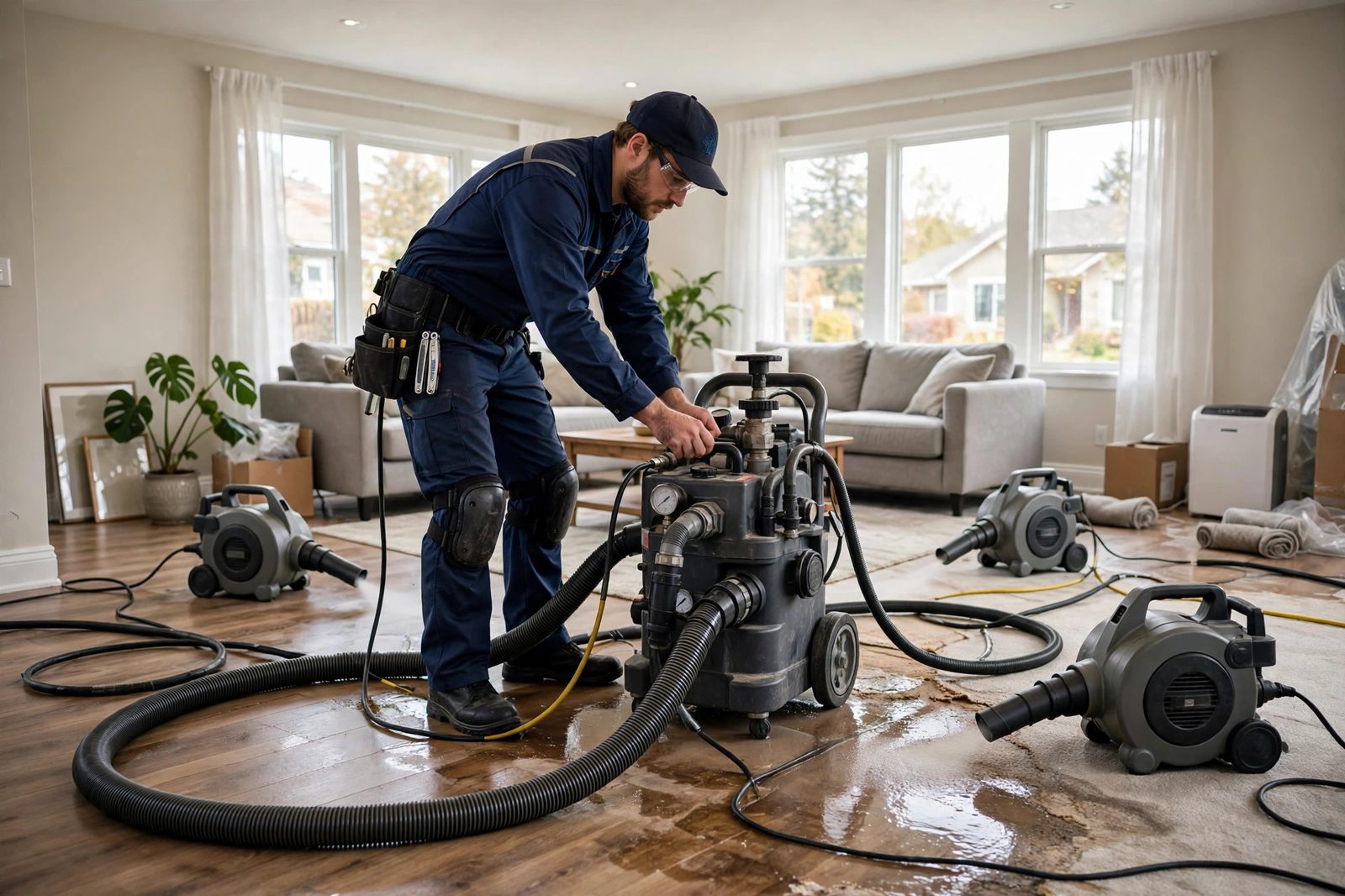
- Slope-driven seepage — stormwater racing down the escarpment saturates soil against foundations and forces water through floor-wall joints.
- Sump pump failure — power loss during the storm that causes the flooding; a battery backup pump and high-water alarm are the standard fix.
- Storm-sewer surcharging — when the street's drains can't keep up, water finds basement windows, stairwells, and floor drains.
- Aging laterals — clay and cast-iron laterals with root intrusion back up first.
And the risk is current, not historical: on August 6, 2024, Cuyahoga County was under a state of emergency for a tornado/macroburst outbreak — a regional reminder that the Heights' storm exposure hasn't gone anywhere. Call (614) 956-3233 any time — 24/7 dispatch, extraction, moisture mapping, verified drying, and documented rebuild.
06CTA Blocks
Lyndhurst Basement Flooding? The Slopes Don't Wait — Call Now. Escarpment runoff, an urbanized creek watershed, and aging infrastructure — Lyndhurst's water finds the lowest point, and that's often your basement. Integrity Water Damage Restoration Ohio provides 24/7 emergency water extraction, structural drying, and mold prevention across Lyndhurst and the Heights. Call (614) 956-3233 for immediate response.
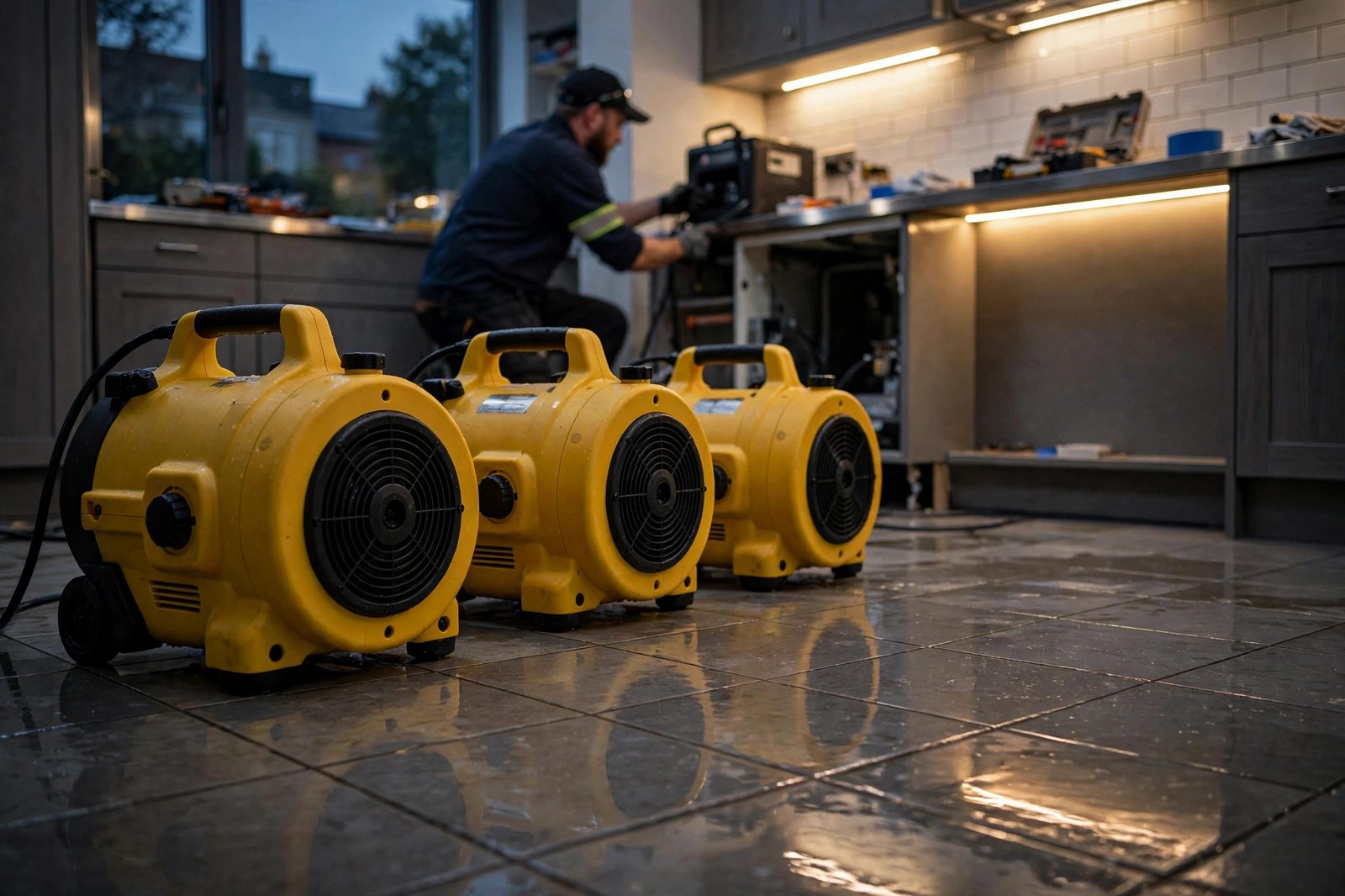
Free Moisture Inspection — Lyndhurst & the East Side Musty smell? Seepage after every hard rain? Stains spreading on the foundation wall? We'll inspect, measure moisture behind walls and under floors, and give you an honest assessment — free. Serving Lyndhurst, South Euclid, Mayfield Heights, and Richmond Heights. Call (614) 956-3233.
Our Restoration Process
A disciplined, four-step method — no guesswork, no shortcuts, no surprises.
Rapid Assessment
We inspect on arrival, map hidden moisture with meters and thermal imaging, and lay out a clear plan before any work starts.
Water Extraction
Truck-mounted and portable extractors pull standing water fast — the single biggest factor in limiting total damage.
Drying & Dehumidification
Commercial air movers and dehumidifiers run under daily monitoring until every material reaches verified dry standard.
Cleaning & Restoration
Sanitizing, odor removal, drywall, flooring, and paint — your property restored by one accountable crew.
“Every hour water sits, the damage — and the bill — grows.”
Call (614) 956-3233 — We Answer 24/7Why Ohio Homeowners Call Us First
- 24/7 live dispatch — a real person answers, day or night, holidays included
- 60-minute emergency response goal across our Ohio service area
- Upfront, honest pricing explained before work begins
- Insurance-ready documentation — photos, moisture logs, line-item reports
- Mold prevention built in — antimicrobial treatment on every drying job
- One accountable crew from emergency extraction to final repairs
Water Damage Can't Wait — Neither Do We
Our Ohio crews are on call 24/7 for emergency water extraction and drying.
Call (614) 956-3233 Now?Frequently Asked Questions — Water Damage in Lyndhurst
The combination of Portage Escarpment slopes (stormwater channels downhill fast), an urbanized Euclid Creek watershed, 1950s–60s-era storm infrastructure, and sump-pump dependence. When intense rain overwhelms drains, water takes the path of least resistance — often your basement. Call (614) 956-3233 for emergency extraction.
NEORSD's Euclid Creek Tunnel and pump station, brought online in August 2018, were built to cut combined-sewer-overflow discharges to Euclid Creek during wet weather — evidence that sewer overflows in this watershed were a chronic, documented problem. It helps the creek; it doesn't waterproof your basement.
Stay out of it — it's hazardous Category 3 black water. Don't run fans; they spread contamination. Call (614) 956-3233 immediately for emergency extraction, contaminated-material removal, and disinfection.
Mold can begin within 24–48 hours of water exposure, per widely cited EPA guidance. Lyndhurst's humid summers make that window unforgiving — emergency extraction and professional drying on day one is the single most important thing you can do.
Standard policies typically exclude it — you need a water backup endorsement. Rising creek water needs a separate flood policy. After any event, photograph everything and call us at (614) 956-3233 for claim-ready documentation.
Yes — Lyndhurst, South Euclid, Mayfield Heights, Richmond Heights, University Heights, and surrounding east-side communities. Call (614) 956-3233 24/7.
Also Serving Nearby Communities
Fast response across the region — pick your town for local flood risks and what to do first.
How Was Your Experience?
If our crew helped you through a water emergency, your review helps Ohio neighbors choose with confidence.